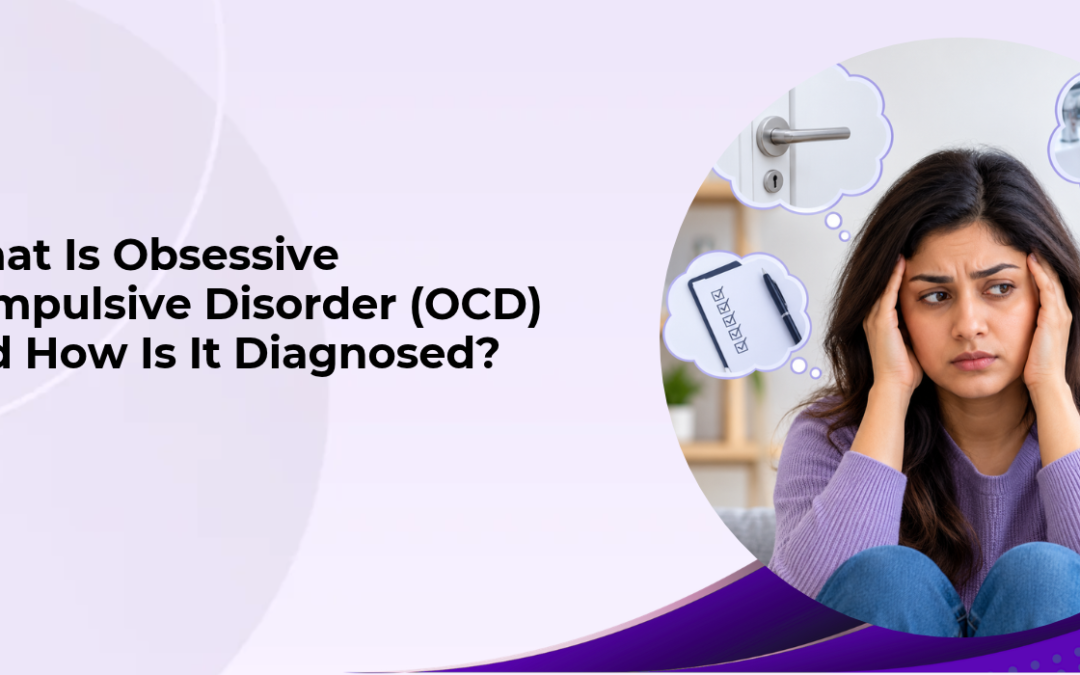
OCD, short for obsessive compulsive disorder, is a long-term condition in which two things feed each other. Unwanted thoughts, images or urges keep intruding, and the person carries out repeated actions or mental rituals to get some relief from them. The first are known as obsessions and the second as compulsions. When the cycle takes more than an hour a day, or causes real distress, it begins to interfere with work, studies and relationships. It commonly starts between late childhood and young adulthood, and a diagnosis is made through a clinical assessment by a qualified mental health professional.
According to Dr. Soumya Kamath, Psychiatrist in Mumbai, “Many people call obsessive compulsive disorder fussiness or perfectionism, and the confusion begins right there. Being neat isn’t the issue. The problem is the distress a thought brings and the hours a ritual can take. A proper conversation about what the person experiences is usually where separating OCD from other conditions begins, and each case is looked at on its own terms.”
Have questions about OCD assessment or treatment? Speak to the specialist
What Are the Main Symptoms of OCD and How Do They Show Up?
The picture can be mostly obsessions, mostly compulsions, or a blend, and it rarely looks the same in two people.
- Obsessions. Unwanted thoughts, images and urges keep coming back. The person usually knows the worry is out of proportion, and the distress stays all the same.
- Compulsions. Checking, washing, counting, arranging, or repeating words silently. Relief comes, but it’s brief, and the thought is soon back.
- Time and distress. A rough benchmark in diagnostic criteria is more than an hour a day taken up by symptoms. Once they cut into routines, they matter clinically.
- Themes. The content differs a good deal from person to person. Contamination, doubt, symmetry and unwanted harm-related thoughts are the ones described most.
- Other conditions. Anxiety and mood disorders often come along with OCD, so the evaluation looks at the whole person, and support through OCD treatment is shaped around that.
How Is OCD Diagnosed?
There’s no blood test or scan for OCD. Doctors rely on a careful clinical assessment instead.
- A detailed conversation. The psychiatrist asks what the thoughts are like, which rituals follow, how long it’s been going on and how much of the day it takes up.
- Daily life. Sleep, work, studies and relationships show how far the symptoms reach.
- Ruling out lookalikes. Anxiety, depression, some medical problems and substance use can look like parts of OCD. Each has to be checked before the diagnosis is made.
- Rating scales. The Yale-Brown Obsessive Compulsive Scale scores severity out of 40. It’s a measuring tool, not a diagnosis by itself.
- A habit isn’t automatically OCD. Going back to check a lock now and then is ordinary. What marks OCD is the repeating, the distress and the difficulty stopping, as explained in this post on how a habit differs from OCD.
What Determines the Right Treatment Approach for a Person With OCD?
There’s no cure for OCD as such, yet treatment helps many people keep the symptoms in check. Which approach suits a person depends on the points below.
- Severity. Milder symptoms may settle with therapy alone. When they’re more disruptive, a combined plan may be needed.
- Therapy. Cognitive behavioural therapy sits at the centre, in particular exposure and response prevention.
- Medication. This is considered case by case. Selective serotonin reuptake inhibitors, a group of antidepressants, may be prescribed depending on symptoms and general health. They can take several weeks to show their full effect.
- Response so far. If OCD hasn’t improved with the usual treatments, options such as brain stimulation can be discussed.
- Other conditions and follow-up. If depression or anxiety is present too, the plan has to cover that. Regular reviews then decide how it changes over time. A guide to OCD treatment options covers the choices in more detail.
KEY TAKEWAYS
- OCD pairs intrusive thoughts with repeated behaviours, and the pair causes distress and eats into the day.
- It often starts between late childhood and young adulthood.
- A clinical assessment makes the diagnosis. Blood tests and scans can’t confirm OCD.
- Treatment is planned for the individual, with therapy, medication or a mix of the two.
FAQs
Is OCD just a need to keep things neat?
No. It’s about distressing thoughts and rituals, not simply liking things tidy.
Does OCD show up on a blood test or scan?
No. The diagnosis comes from a doctor’s assessment of symptoms and daily life.
When does OCD usually start?
Most often from late childhood to young adulthood, but it can start later too.
Who can diagnose OCD?
A psychiatrist or other qualified mental health professional, can diagnose OCD after a detailed assessment