OCD responds best to a mix of Cognitive Behavioural Therapy, specifically Exposure and Response Prevention, and SSRI medication once symptoms move past the mild stage. Milder cases can often be managed with therapy alone, no medication needed. What actually works depends less on the diagnosis itself and more on how long the symptoms have been running the show, and how much of daily life they’ve taken over.
According to Dr. Soumya Kamath, Psychiatrist in Mumbai, “Most people wait years before coming in, usually because they’ve convinced themselves it’s just a personality thing. By the time they do, the exposure work tends to be harder.”
What Treatment Options Work Best for OCD?
There isn’t one fixed protocol here. What gets used depends on how severe things are, what’s already been tried, and whether daily functioning is taking a hit.
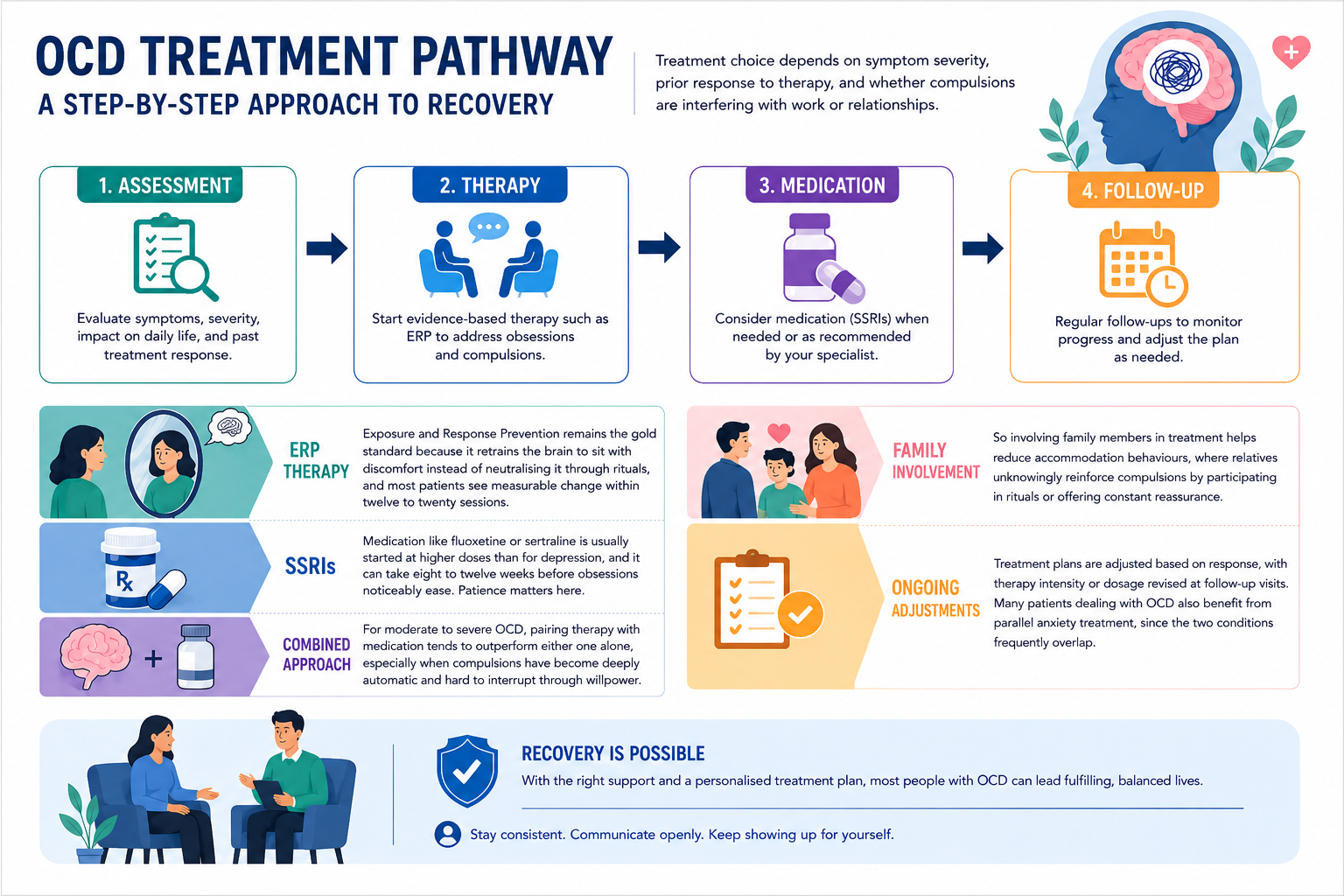
OCD treatment is most effective when tailored to the individual. A combination of ERP therapy, medication when needed, and regular follow-ups can help reduce symptoms and improve daily life. Early treatment and consistent support often lead to better long-term outcomes.
Plans shift as treatment progresses; therapy intensity or dosage gets revised at follow-ups based on how someone’s actually responding. A good number of patients dealing with OCD also need parallel anxiety treatment, since the two conditions tend to travel together.
How Do Therapy and Medication Help Manage OCD?
Therapy and medication aren’t doing the same job. Knowing the difference helps set expectations that are actually realistic, instead of hoping for overnight change.
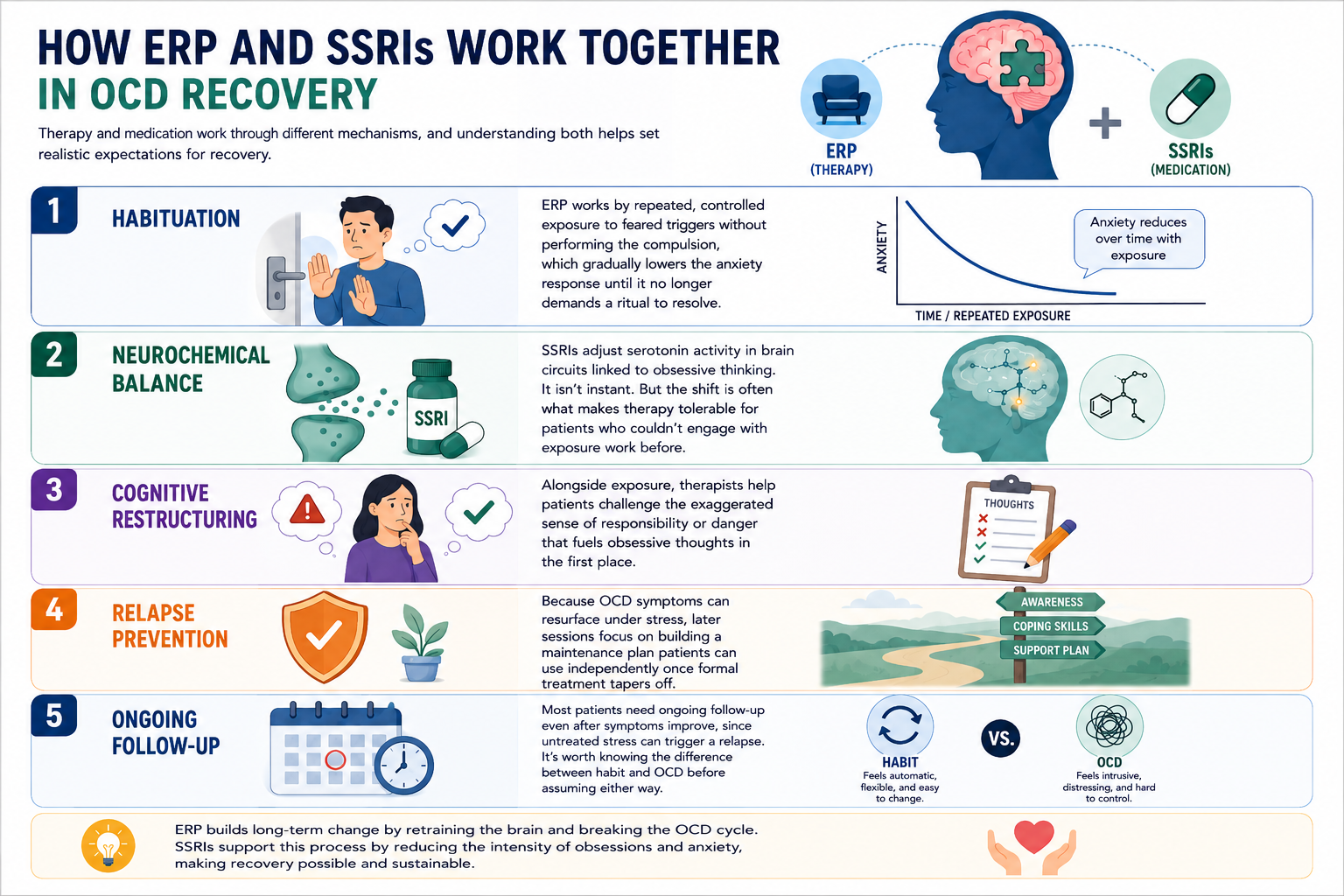
ERP therapy and SSRIs support OCD recovery in different but complementary ways. While ERP helps reduce anxiety by changing behavioral responses, SSRIs improve brain chemistry, making it easier for many people to engage in therapy and maintain long-term progress.
Even after symptoms ease, most patients still need periodic check-ins, because untreated stress has a way of pulling old symptoms back. Worth reading if you’re unsure: habit or OCD, a common grey area.
Why Choose Dr. Soumya Kamath for OCD Treatment?
Dr. Soumya Kamath holds an MBBS and MD in Psychiatry, trained at Dr. D. Y. Patil Hospital, Navi Mumbai, and has been in practice since 2020. Her clinical background covers outpatient consultations, psychiatric emergencies, and rehabilitation planning, OCD included.
Patients often walk in convinced it’s just a habit. They walk out with an actual diagnosis, a plan, and a timeline instead of vague reassurance. That’s really the whole point of a proper assessment.
Call +91 7304066764 to book your consultation.
FAQ's
Can OCD be fully cured?
Many patients get significant symptom control, though some ongoing management may still be needed.
Is ERP therapy painful or distressing?
It’s uncomfortable at first, but sessions are paced and supervised so it stays manageable.
Do children get OCD too?
Yes, it can show up in childhood and gets treated with age-appropriate therapy.
How soon do SSRIs start working for OCD?
Usually eight to twelve weeks of consistent use before real improvement shows.
References
- National Institute of Mental Health – Obsessive-Compulsive Disorder
- World Health Organization – Mental Disorders
Disclaimer: This blog is for general informational purposes only and does not replace personalised medical advice from a qualified psychiatrist.