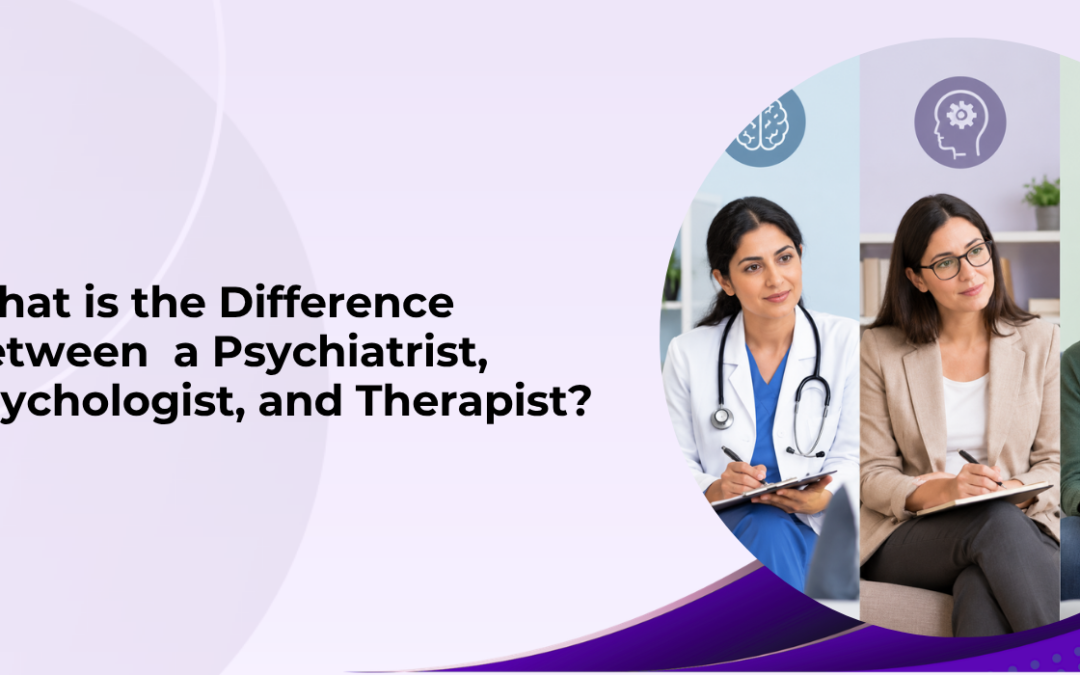
A psychiatrist is a medical doctor who diagnoses mental health conditions, prescribes medication and can offer therapy, while a psychologist uses assessment and psychotherapy without prescribing, and a therapist is a broader title for professionals trained in talk-based treatment. Training length, legal scope and treatment methods separate the three. Many people end up needing more than one.
According to Dr. Soumya Kamath, psychiatrist in Mumbai, “Patients often tell me they’ve seen a counselor for years when what they needed first was a medical evaluation.”
How Is Their Training Different?
| Psychiatrist | Psychologist | Therapist | |
| Starting point | Medical school (MBBS) | Bachelor’s degree in Psychology | Bachelor’s degree, usually in psychology, social work or a related field |
| Further education | MD in Psychiatry or DNB, about 3 years | Master’s in Psychology, then an M.Phil in Clinical Psychology for clinical practice (about 4 years combined) | Master’s in counselling, psychology or social work, or a diploma or certificate course in therapy |
| Total time after school | About 8 to 9 years | About 7 years | About 2 to 5 years, depending on the route |
| What they study | Medicine, the brain, how the body and mind affect each other, and how psychiatric drugs work | Human behaviour, personality, psychological testing and therapy methods | Counselling skills, communication and how to support people through emotional difficulties |
| Hands-on training | Hospital postings, treating patients with serious mental illness, emergency and ward care | Supervised clinical internships, including assessments and therapy sessions | Supervised practice sessions or an internship, which vary widely between courses |
| Registration or licence | Registered with the National Medical Commission (NMC) | Clinical psychologists register with the Rehabilitation Council of India (RCI) | No single regulatory body, so credentials depend on the course and institute |
Conditions like depression treatment often begin with a medical evaluation for that reason.
When Should You See Each One?
How long symptoms have lasted and how much it’s disrupting daily life usually decides who you see first.
- Psychiatrist: Hearing voices, sudden panic attacks or a month of three-hour nights need a psychiatric evaluation’
- Psychologist:Ongoing anxiety, past trauma, personality assessments, or persistent habits are reasons to see a psychologist.
- Therapist: Grief, burnout, a rough patch with your partner, basically anything where talking it through with a patient listener is half the cure.
- Together: And plenty of patients use a team, with the psychiatrist managing medication while a therapist handles weekly sessions.
If you’re unsure, a psychiatrist is a safe first stop because they can refer you onward.
Therapists mostly work through talk-based methods, and the post on 30 how anxiety therapy works shows what those sessions involve.
Why Choose Dr. Soumya Kamath?
Dr. Soumya Kamath completed her MBBS at Jawaharlal Nehru Medical College and her MD in Psychiatry at Dr. D.Y. Patil Hospital. . Over 6 years in practice and a 2023 Award of Excellence for Best Postgraduate Student in Psychiatry back that up, and her work covers anxiety disorder treatment, mood disorders and OCD.
She takes time to understand what each patient is going through before suggesting the next steps. The first visit helps patients understand their concerns and the treatment options that may work for them. Call +91 7304066764 to book your consultation.
FAQ's
Who can prescribe medicine, a psychiatrist or a psychologist?
Only the psychiatrist, since they hold a medical degree and a psychologist doesn’t.
Is a therapist a psychologist?
Sometimes, but plenty of therapists are counselors without a psychology degree.
Do I need a referral to see a psychiatrist?
Usually not, you can just book a slot directly.
Can a psychiatrist also do talk therapy?
Yes, plenty do, though many hand therapy to a psychologist and focus on medication.
References
- World Health Organization: Mental disorders fact sheet
- National Institute of Mental Health: Psychotherapies
Disclaimer: This blog is for general informational purposes only and does not replace personalised medical advice.