“Mood swings.” That’s the phrase most people reach for. It isn’t wrong—but it barely scratches the surface. What’s really happening is chemical, structural, and deeply physical: brain circuits falling out of sync, neurotransmitters fluctuating, and regions responsible for emotion, judgment, and regulation struggling to work together as they should. For many of the families I speak with, this is the moment something changes. The conversation shifts from blame to understanding. Once you stop seeing it as a character flaw and start seeing it as biology, seeking treatment no longer feels like admitting failure—it feels like responding to an illness with the care it deserves.
Dr. Soumya Kamath, Psychiatrist in Mumbai, puts it simply:
“I often meet families who assume bipolar disorder is a personality issue or occurs due to a lack of discipline. Once we walk through what’s actually happening in the brain, the shame lifts, and they’re finally ready to look at treatment.”
What Is Bipolar Disorder
Extreme mood swings—that’s the short version. But the reality is far more profound. On one end is Mania: relentless energy, racing thoughts, impulsive decisions, and a mind so excited that sleep can feel unnecessary. On the other is Depression: a crushing heaviness, hopelessness, exhaustion, and a retreat from the world. These aren’t the ordinary emotional highs and lows that everyone experiences. They’re intense, sustained episodes that can upset careers, fracture relationships, disrupt finances, and, at their worst, make something as simple as getting out of bed feel like an impossible task.
How the Brain Regulates Mood
Picture the brain as a network of regions constantly talking to one another. The prefrontal cortex hels us plan, weigh consequences, and keep impulses in check. The amygdala is the emotional alarm system, reacting quickly and instinctively to what we experience. Linking these regions are chemical messengers like dopamine, serotonin, and norepinephrine, carrying the signals that regulate mood, motivation, sleep, and energy.
Under normal circumstances, this system is remarkably well coordinated. In bipolar disorder, however, that communication begins to break down. The brain’s emotional accelerator and its braking system fall out of sync, and it’s from this disruption that the symptoms of bipolar disorder begin to emerge.
What Causes Bipolar Disorder in the Brain?
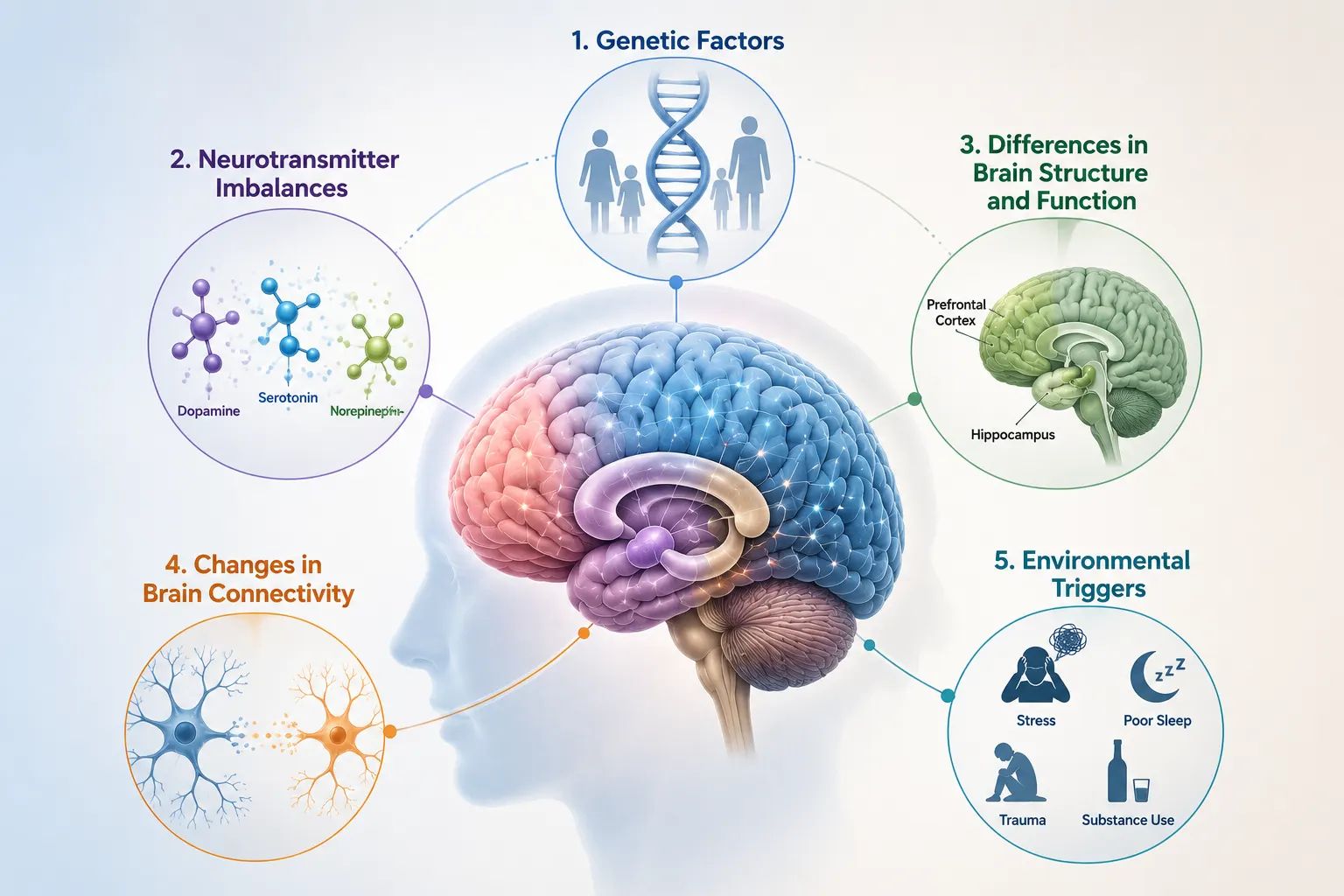
Genetic Factors
It often runs in families. That’s one of the most consistent findings in bipolar disorder research. Studies estimate its heritability to be between 60 to 80%—remarkably high by psychiatric standards. If a parent or sibling has bipolar disorder, your own risk is significantly higher than that of the general population. But genetics are not destiny. Many people inherit a family history of the illness and never develop it themselves.Neurotransmitter Imbalances
Two of the key neurotransmitters implicated in bipolar disorder are dopamine and serotonin. Dopamine is closely linked to reward, motivation, and drive. When its activity excessively increases—it can contribute to the heightened energy, grandiosity, impulsivity, and reduced need for sleep that characterize mania. Serotonin, meanwhile, plays a central role in mood regulation. Lower serotonergic activity has long been associated with depressive symptoms. The biology, of course, isn’t as simple as one neurotransmitter causing one symptom. Bipolar disorder emerges from a complex interplay of multiple brain chemicals, neural circuits, and genetic factors.Differences in Brain Structure and Function
Scans add another layer of evidence. In individuals with bipolar disorder, the prefrontal cortex and hippocampus, both tied to emotional regulation and memory, often look structurally different from normal. This might explain why stress lands harder, or differently, than it does for someone without the condition.Changes in Brain Connectivity
It’s not just what these regions look like. It’s how well they’re talking to each other. Weaken the connection between the amygdala and prefrontal cortex, and the brain loses some of its grip on emotional reactions. That’s a big part of why episodes can feel so consuming once they take hold.Environmental Triggers
Genetics may load the gun, but the environment often pulls the trigger. Chronic stress, unresolved trauma, prolonged sleep disruption, major life changes, or substance use can all act as catalysts, tipping someone who is already vulnerable into a manic or depressive episode. Genes create the susceptibility; environmental factors influence whether, when, and how that vulnerability is expressed. Neither piece tells the whole story on its own—it’s the combination that shapes the course of the illness. Watch this video for a clear, relatable breakdown of how mood shifts in bipolar disorder actually feel, explained in an easy-to-follow format:Curious what’s really driving your mood patterns? Book a consultation with Dr. Soumya Kamath.
Is Bipolar Disorder Caused by a Chemical Imbalance Alone?
Not quite. Neurotransmitters are undeniably important, but reducing bipolar disorder to “a chemical imbalance” oversimplifies a far more complex condition. The illness emerges from the interplay of genetics, brain circuitry, neurotransmitters, hormones, and life experiences, each influencing the others in ways we’re still working to fully understand. The illness is caused by an intricate network of biological and environmental factors—and the way that they interact—shapes the onset and course of bipolar disorder.Can These Changes occurring in the Brain be Managed with Treatment?
Yes, brain changes linked to bipolar disorder can be managed well. Treatment and healthy habits can help stabilize mood and support more balanced brain activity over time. ● Mood stabilizer medications: Help control extreme mood changes and reduce future episodes. ● Therapy: Forms of CBT can help manage unhelpful thoughts and emotional triggers. ● Consistent sleep: A regular sleep schedule can help prevent mood episodes. ● Stress management: Exercise, mindfulness, and relaxation can support emotional stability. ● Combined approach: Of all of the above, often works the best. ● Long-term stability: With continued treatment and support, many people can achieve greater emotional stability.Looking for a customized treatment program? Book your assessment today.
When to Seek Professional Help?
Mood swings that have dragged on for weeks. Sleep that’s suddenly unrecognizable. Decisions that don’t feel like you. Sadness that won’t lift, or pulling away from people you used to care about seeing. Any of that is worth a conversation. Don’t wait for things to reach a breaking point. Getting evaluated early by a mental health professional like Dr. Soumya Kamath tends to change how the whole thing plays out.Prevent symptoms from getting worse. Talk to Dr. Soumya Kamath today.
FAQs
Does bipolar disorder completely stem from genes?
No. While bipolar disorder is highly heritable—genes alone do not determine who develops the condition. Most people with a family history of bipolar disorder never experience it themselves.
But, factors such as chronic stress, traumatic experiences, prolonged sleep disruption, substance use, and major life events can act as triggers in someone who is genetically predisposed.
Is bipolar disorder diagnosed by a brain scan?
Not on its own. A scan might show patterns consistent with the condition, but a diagnosis is made via a full clinical evaluation and appropriate testing tools.
Does bipolar disorder worsen without treatment?
Yes. For many people, bipolar disorder tends to become more severe over time if it is left untreated, although the course of the illness varies from person to person.
Can lifestyle changes actually influence brain chemistry?
Yes—more than most people realize. The brain is remarkably adaptable, and the choices we make every day can influence how it functions. Regular exercise, consistent sleep, managing stress, eating a balanced diet, avoiding alcohol and recreational drugs, and maintaining strong social connections all influence the brain’s chemistry and circuitry over time.

Trackbacks/Pingbacks