
Depression isn’t always characterized as it is thought to be. It can sometimes include difficulty getting out of bed. Sometimes, a person can play at work, at their duties and responsibilities, and interact with other people in the midst of being drained emotionally in them.
Once people have identified these symptoms, they may wonder how things can get better: “how can things get better?”
It’s not always easy to determine the answer. Everyone’s depression moments are unique and time is needed to heal from it. But with help and care, it’s possible to slowly get your appetite back for life.
Dr Soumya Kamath Psychiatrist in Mumbai says, “Every patient is unique, and I am committed to offering personalized care, tailored to their specific needs and long-term recovery goals.
Understanding Why Depression Recovery Takes Time
Depression is not just a “normal” feeling of sadness that goes away after one sleeps it off or changes scenery. It can impact on a person’s thinking, feelings, and reacting to normal circumstances.
A depressed person may feel:
- Periods of low mood, emptiness or hopelessness.
- Loss of interest in activities and hobbies they used to enjoy.
- Sleeping too much or struggling to sleep.
- Feeling tired even after resting.
- Finding it difficult to concentrate.
- Withdrawing from friends and family.
These experiences can affect people differently. This is why there is no universal timeline for the depression recovery process.
If you want a quick look at how depression can show up in daily life, you can watch this short video.https://youtube.com/shorts/lEcKO8-RwSc?si=kSS5fTD6INa8IQ7b
How Can You Recover from Depression?
Normally, recovery will be accomplished by knowing what the symptoms are the consequence of, and what should be done to correct them.
1. Interpret an emotion/observation
If sadness, loss of interest or emotional exhaustion seems to interfere with your life, find out what you are experiencing by consulting a professional.
2. Consider Psychotherapy
There are some therapies that are also effective in teaching you how to recognise negative thinking patterns and how to change them, for example, Cognitive Behavioural Therapy (CBT).
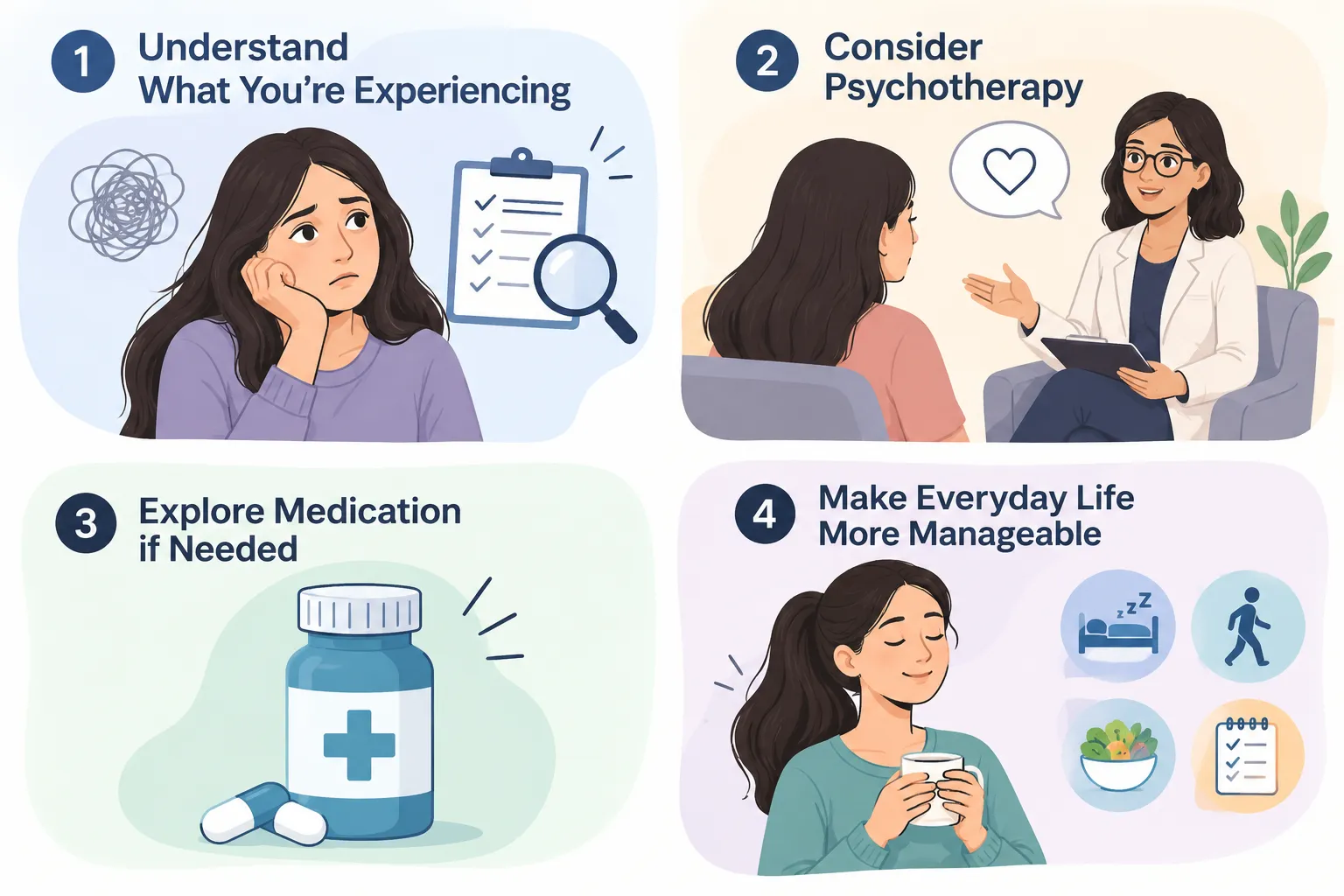
3.If needed, discuss Medication with the family members.
Antidepressants might be prescribed as a treatment in addition to therapy, depending on the symptoms.
- Make everyday life a little more manageable
- Aim to get a fairly consistent sleep schedule.
- Include some form of activity – comfortable level.
- Don’t stay in a completely enclosed space.
- Eat regular, balanced meals.
- Break larger responsibilities into smaller tasks.
What Does Recovery from Depression Actually Look Like?
Recovery does not necessarily mean waking up one morning feeling completely happy. Sometimes, the first improvement is simply being able to get through the day without feeling as overwhelmed as before.
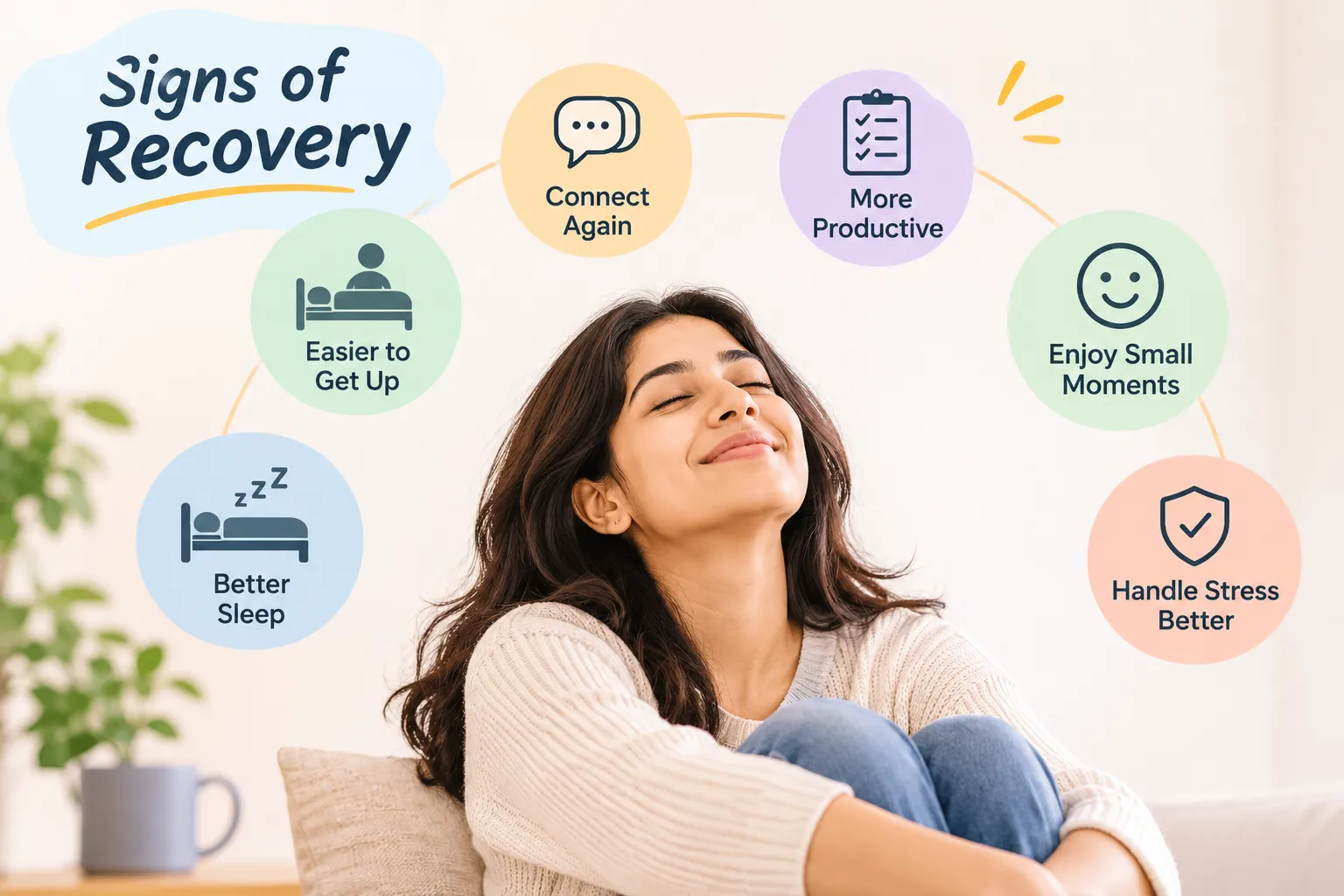
You might notice that:
- You are sleeping a little better.
- Getting out of bed feels less difficult.
- You begin responding to messages again.
- Activities that once felt exhausting become manageable.
- You find yourself enjoying small moments.
- You feel better equipped to handle stressful situations.
These can be encouraging signs of recovery from depression
How Long Does It Take to Recover from Depression?
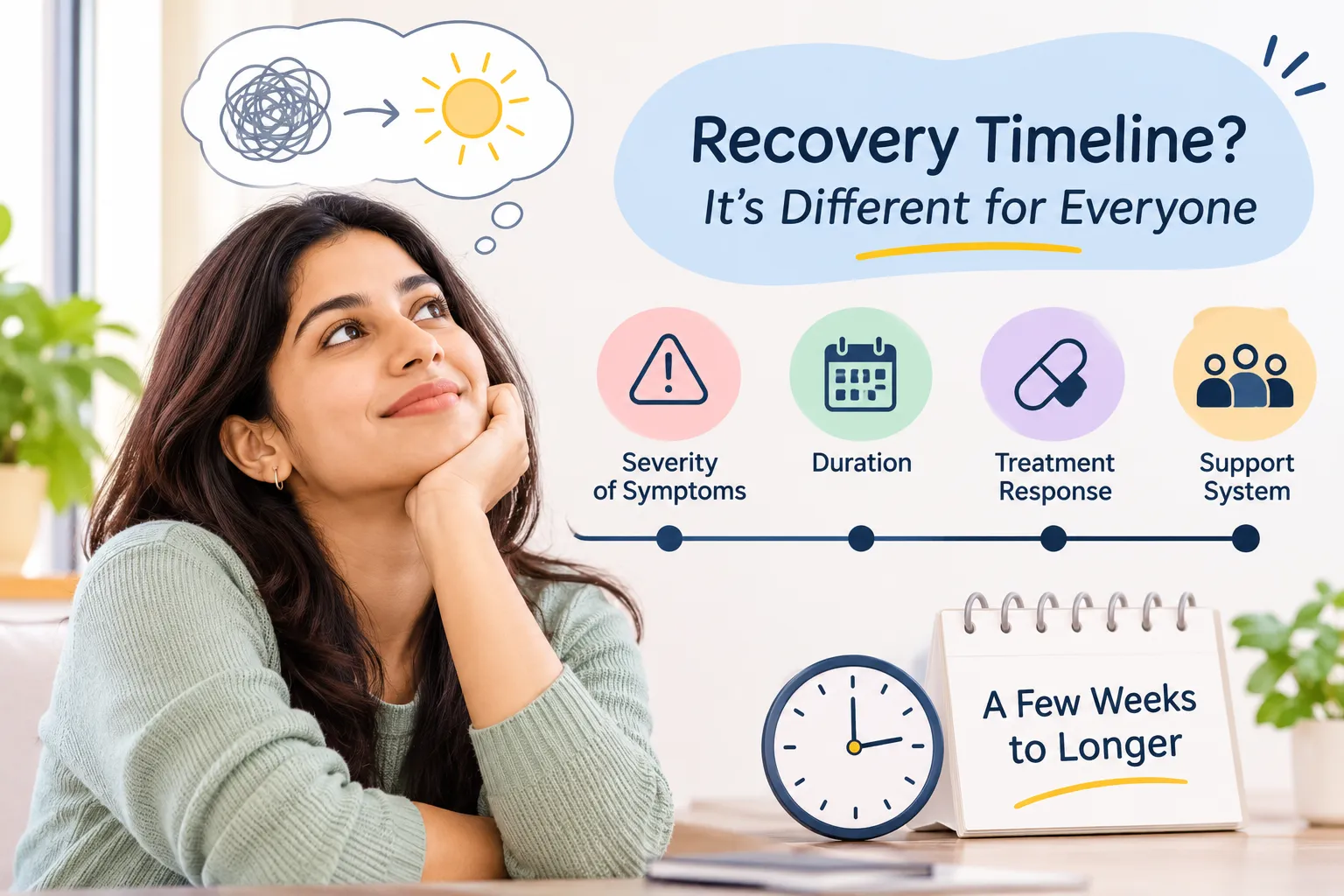
There is no fixed answer to how long depression recovery takes. Some people notice improvements within a few weeks of starting treatment, while others require a longer period of care.
The duration may depend on:
- How severe the symptoms are.
- How long the person has been experiencing depression.
- Their response to treatment.
- Other medical or psychological concerns.
- The support available to them.
Regular follow-ups allow the treating professional to assess progress and adjust the treatment plan when necessary.
Can Depression Return After Recovery?
Yes, depression can recur in some people. This does not mean that recovery was unsuccessful.
Learning to recognise early changes in mood, sleep, energy and interest in activities can help someone seek support sooner.
Following the recommended treatment plan and attending follow-up appointments are important parts of long-term care.
Frequently Asked Questions
1. Can you recover completely from depression?
Many people recover from depressive episodes and return to their usual activities. Some may experience recurring episodes and need continued support. Outcomes vary between individuals.
2. What are the first signs of depression recovery?
Improved sleep, slightly better energy, renewed interest in activities and finding everyday tasks easier can be early signs of improvement.
3. Can depression improve without medication?
Some people may improve with psychotherapy and other non-medication approaches. Others benefit from medication. The appropriate approach depends on an individual’s clinical needs.
4. Is it normal to have bad days during depression recovery?
Yes. Recovery is not always a straight line. Occasional difficult days can occur, but persistent worsening of symptoms should be discussed with a mental health professional.
5. When should I seek help for depression?
If symptoms persist for two weeks or more, or begin affecting your relationships, work, sleep or everyday functioning, consider seeking a professional assessment.