Anxiety therapy works by slowly retraining how the brain reacts to perceived threat, mostly through Cognitive Behavioural Therapy and, when needed, relaxation-based techniques. It’s not an hour of venting that leaves you feeling lighter, though that’s what most people walk in expecting. Real change comes from spotting the thought patterns feeding the anxiety and then practising, on purpose, a different way to respond to them.
According to Dr. Soumya Kamath, Psychiatrist in Mumbai, “People think therapy means venting for fifty minutes. It’s closer to physiotherapy for the mind, honestly, you’re building a skill, and skills need reps.”
What Happens During Anxiety Therapy Sessions?
There’s a rough shape to how sessions go, though it shifts a lot depending on what’s actually driving the anxiety.
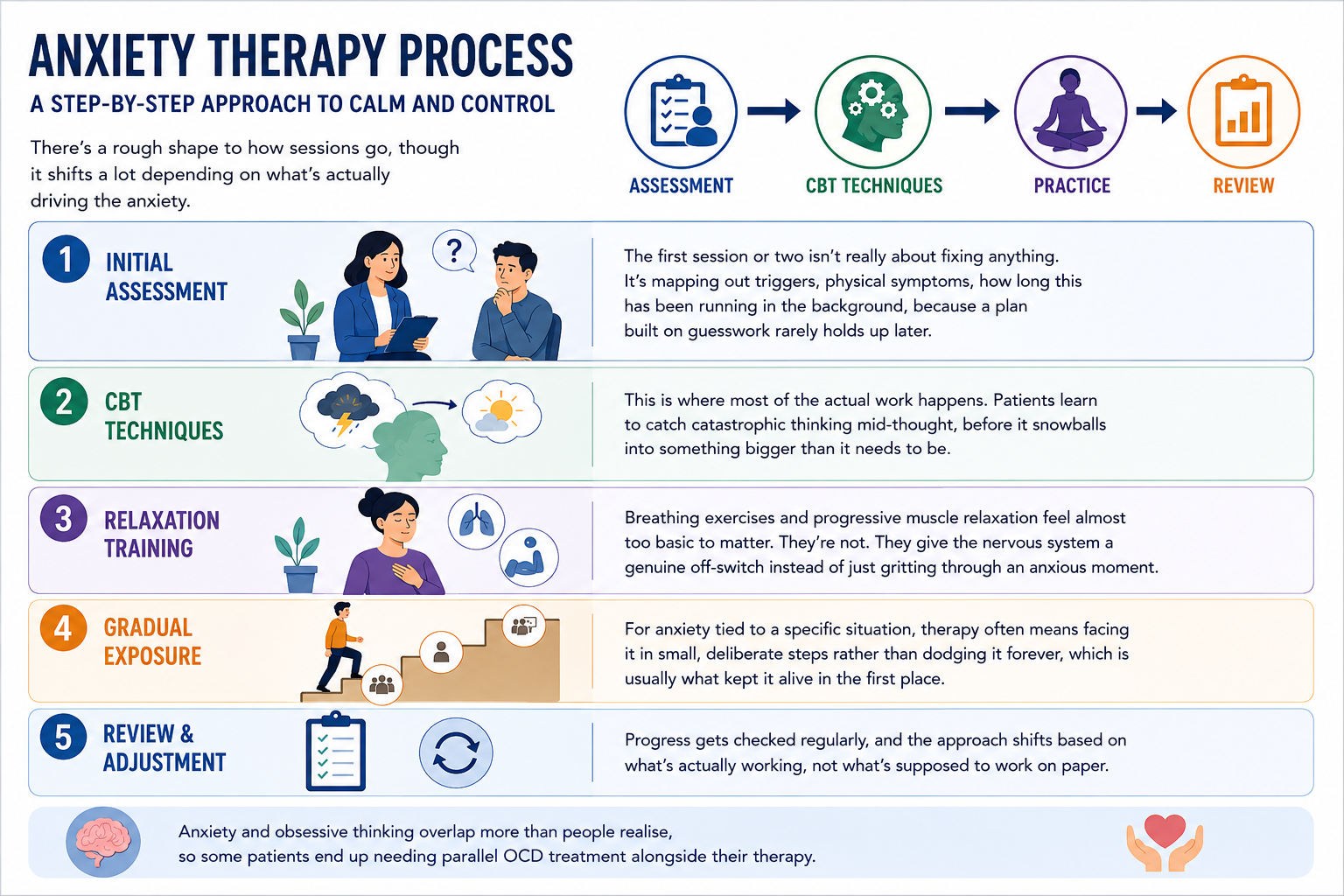
Anxiety therapy is a structured process that focuses on understanding the root cause of anxiety and building practical coping skills over time. Treatment typically begins with an assessment, followed by cognitive behavioral therapy (CBT), relaxation techniques, gradual exposure to feared situations when appropriate, and regular progress reviews. Each step is tailored to the individual’s needs, helping them develop healthier thought patterns, manage symptoms more effectively, and achieve long-term emotional well-being.
Progress gets checked regularly, and the approach shifts based on what’s actually working, not what’s supposed to work on paper. Anxiety and obsessive thinking overlap more than people realise, so some patients end up needing parallel OCD treatment alongside their therapy.
Why Does Anxiety Therapy Take Time to Show Results?
Patients want quick relief. Fair enough. But anxiety therapy moves slower than most other treatments, and there’s a real reason for that.
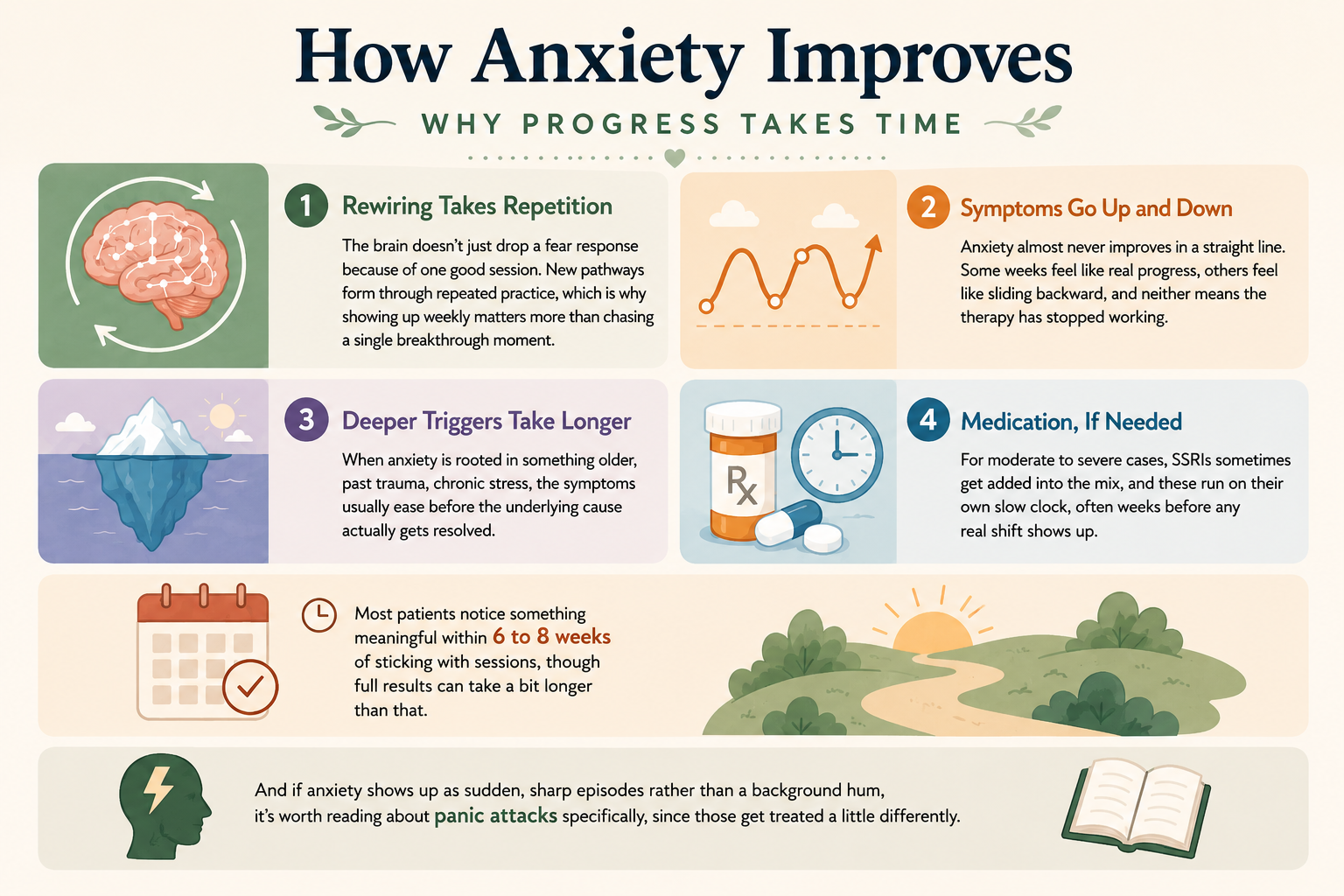
Anxiety recovery is a gradual process rather than an instant change. As therapy continues, the brain builds healthier patterns through repeated practice, while symptoms may naturally improve and worsen along the way. For people with long-standing anxiety or past trauma, healing often takes longer because the underlying causes need time to be addressed. In some cases, medication may also be recommended, but it usually takes several weeks to become effective. With consistency and patience, many people begin to notice meaningful improvement within 6–8 weeks, although full recovery may take longer.
Most patients notice something meaningful within six to eight weeks of sticking with sessions, though full results can take a bit longer than that. And if anxiety shows up as sudden, sharp episodes rather than a background hum, it’s worth reading about panic attacks specifically, since those get treated a little differently.
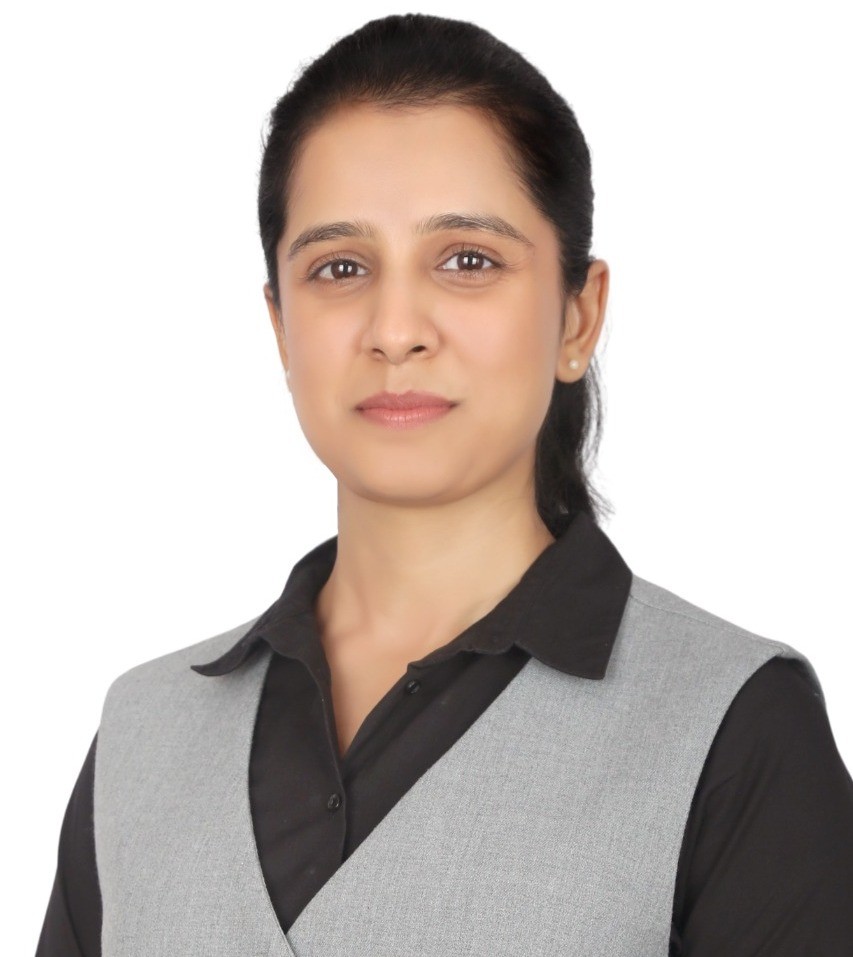
Why Choose Dr. Soumya Kamath for Anxiety Therapy?
Dr. Soumya Kamath holds an MBBS and MD in Psychiatry, trained at Dr. D. Y. Patil Hospital, Navi Mumbai, and has been in practice since 2020. Her work covers outpatient consultations, psychiatric emergencies, and structured therapy planning built around anxiety-related conditions specifically.
Most patients walk in expecting to just talk things out. What they actually leave with is a plan shaped around their life, not a generic worksheet pulled off a template. That difference tends to matter more than people expect going in.
Call +91 7304066764 to book your consultation.
FAQ's
How many sessions does anxiety therapy usually take?
It varies, but many patients notice real change within six to eight sessions.
Is medication always needed for anxiety?
No, mild to moderate anxiety often responds well to therapy on its own.
Can anxiety therapy be done online?
Yes, depending on clinical suitability, online sessions are sometimes an option.
Does anxiety therapy work for panic attacks too?
Yes, though panic attacks usually need a slightly more targeted approach.
References
Disclaimer: This blog is for general informational purposes only and does not replace personalised medical advice from a qualified psychiatrist.
Trackbacks/Pingbacks