
Bipolar disorder is a mental health condition marked by extreme shifts in mood, energy, and activity levels, ranging from manic highs to depressive lows. It affects how a person thinks, sleeps, and functions day to day, and episodes can stretch on for days or weeks at a time. Early recognition changes the outcome. Warning signs tend to build gradually, and often, family members notice the shift before the person experiencing it does.
According to Dr. Soumya Kamath, a leading Psychiatrist in Mumbai, “Mood episodes rarely appear out of nowhere; sleep changes and shifts in energy usually show up weeks before a full episode takes hold.”
What Are the Emotional and Behavioral Signs?
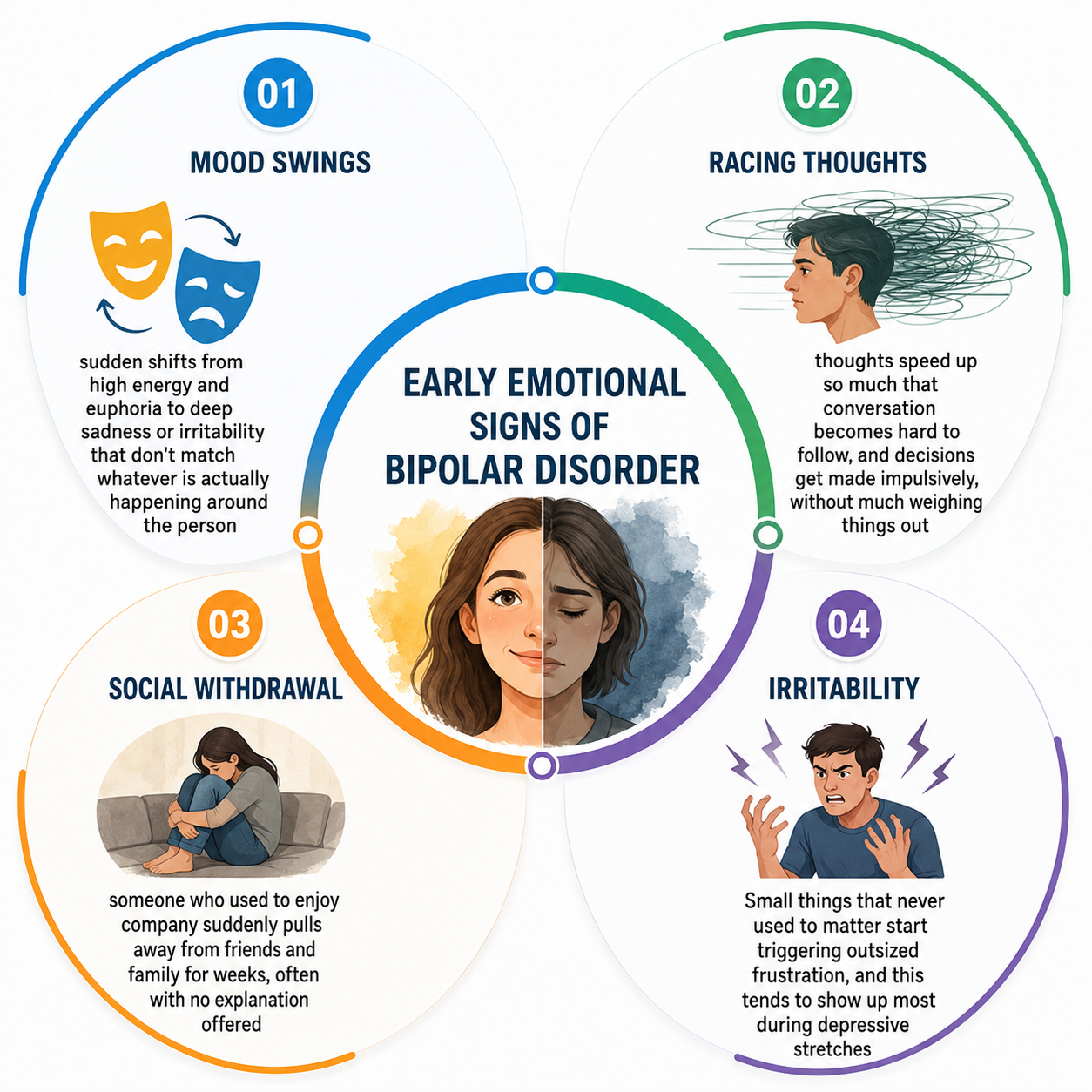
So these shifts aren’t just bad days. They follow a pattern, and the pattern repeats. Because mood episodes often overlap with anxiety, ruling out anxiety treatment needs is a routine part of assessment.
What Physical Symptoms Should You Watch For?
Beyond mood, bipolar disorder affects the body in ways that are easy to write off as something else.
Sleep Changes: during manic phases people often need very little sleep and still feel fully wired, while depressive phases bring the opposite: oversleeping and constant fatigue
Appetite Shifts. Eating patterns can swing between skipping meals during high-energy stretches and overeating once mood drops
Restlessness: fidgeting, rapid speech, and an inability to sit still for long often show up during manic or hypomanic episodes
Energy Crashes: after a period of high output, a sudden and heavy drop in energy can make even basic tasks feel impossible
Understanding the difference between bipolar disorder and ordinary stress often comes down to physical symptoms appearing alongside mood changes something explored in depth in this guide on the causes of bipolar disorder, which can help families recognise early warning signs sooner.
Why Choose Dr. Soumya Kamath?
Dr. Soumya Kamath is a Mumbai-based psychiatrist with an MBBS and MD in Psychiatry, trained at Dr. D. Y. Patil Hospital, Navi Mumbai, and has been practising since 2020. Her clinical experience spans outpatient consultations, psychiatric emergencies, and long-term bipolar disorder treatment and rehabilitation planning.
Patients who get diagnosed early typically avoid the repeated crises that come with untreated cycling. Catching the pattern sooner is what keeps life on track, not later.
FAQ's
Does bipolar disorder run in families?
Yes, genetics play a significant role in bipolar disorder risk.
Can bipolar disorder be managed without medication?
Therapy alone rarely controls bipolar disorder; medication is usually essential.
Is bipolar disorder the same as regular mood swings?
No, bipolar episodes last days to weeks, not just hours.
What triggers a bipolar episode?
Sleep disruption, high stress, and substance use are common triggers.
References
Disclaimer: This blog is for general informational purposes only and does not replace personalised medical advice from a qualified psychiatrist.