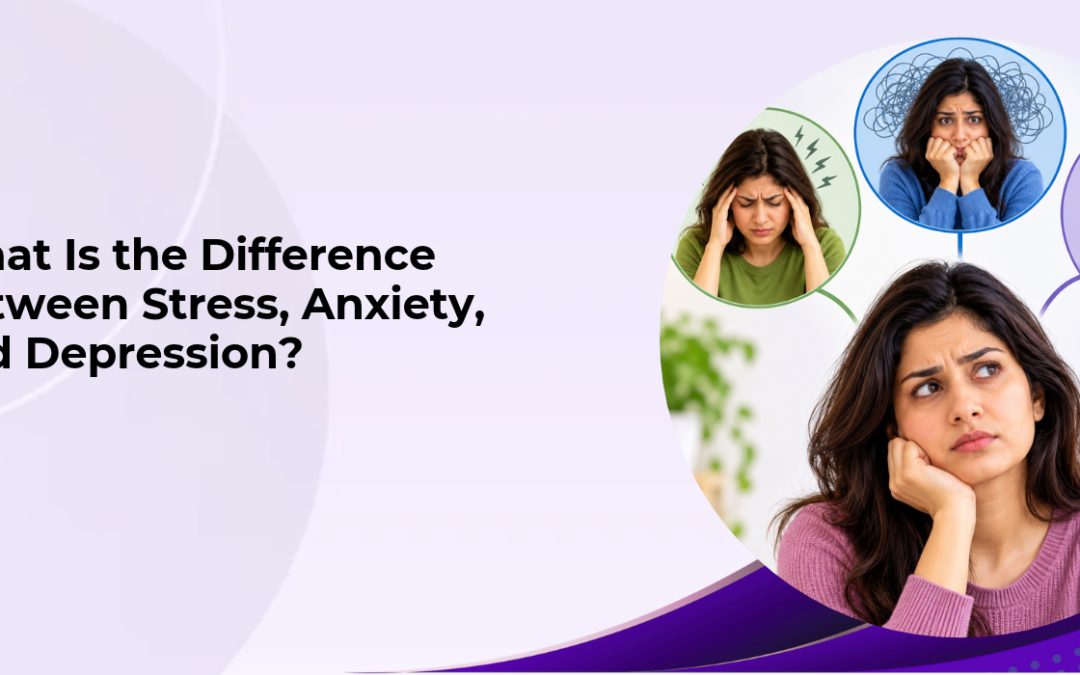
Stress, anxiety, and depression get mixed up all the time, even by the people living with them. They share symptoms and they can lead into one another, but they are not the same, and treatment depends on which one is present. If low mood or constant worry hangs on for weeks and begins to affect work or family life, it is worth considering that a mental illness may be involved.
According to Dr. Soumya Kamath, an expert in schizophrenia treatment in Mumbai, “many people say it’s just stress for a long time before they decide to see someone. Often it has been months.”
To understand how an assessment works and what the first visit involves
ENQUIRE NOW |
Stress, Anxiety, and Depression: How They Differ
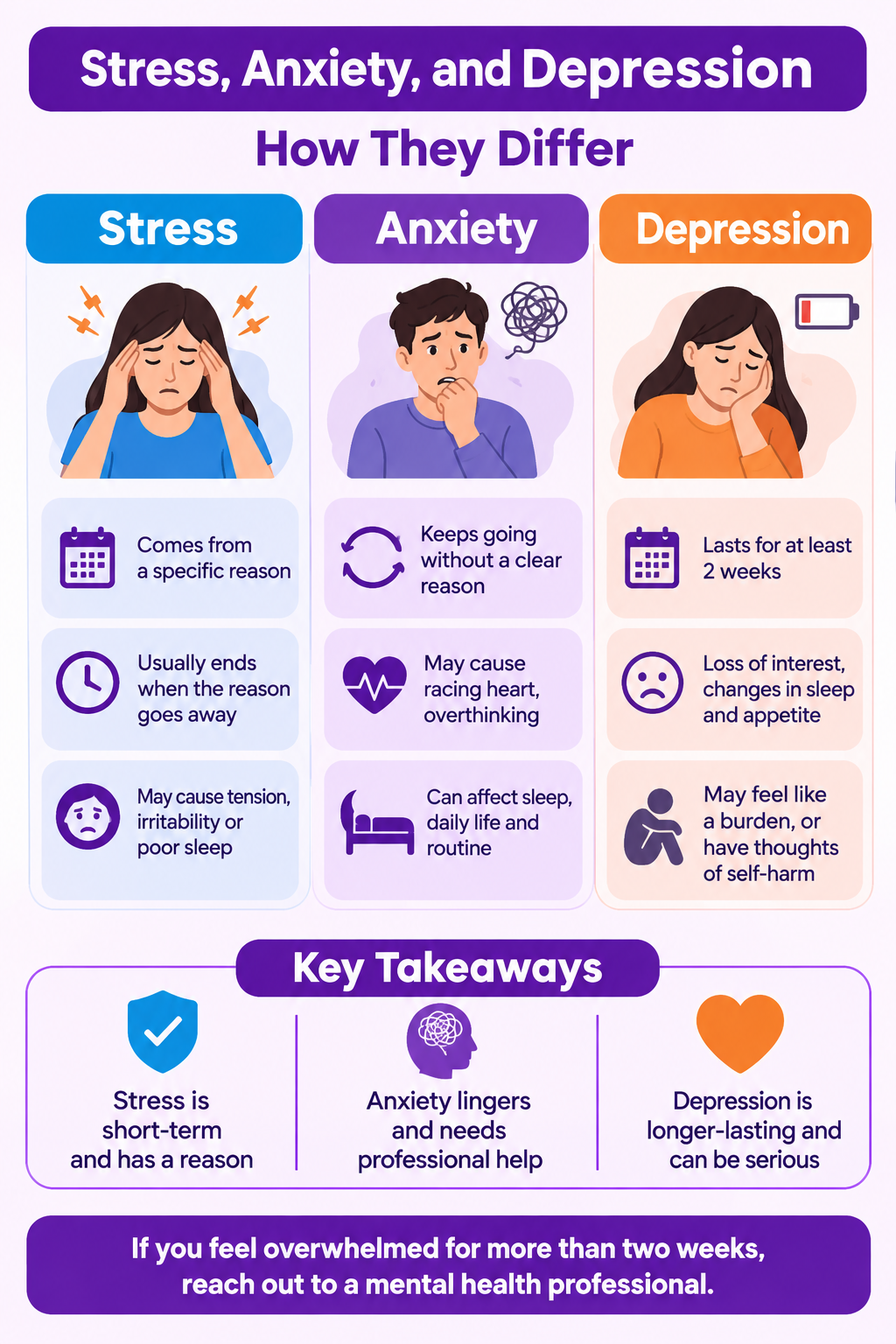
Take the week before a big submission, or the month when the EMI and the school fee are due at the same time. ou’re tense, snapping at people, sleeping three or four hours. Then the deadline passes and things slowly return to normal. That is stress. It has a reason, and it ends when the reason does.
Anxiety keeps going without one. You lie awake replaying a conversation from the afternoon. Your heart pounds on a normal train ride. You stop picking up unknown calls, or you find excuses to skip the meeting. After a few months of this, it is usually diagnosed as an anxiety disorder, which is a mental illness and a treatable one.
Depression feels different from the inside. The mood stays flat most of the day, nearly every day, for at least two weeks. Cricket with friends or cooking on a Sunday stops being worth the effort. Sleep goes off, appetite changes, and getting out of bed takes real work. Some people begin to feel they are a burden at home, and a few have thoughts of ending their life, which needs help straight away. Our page on depression treatment in Mumbai explains the available treatment approaches.
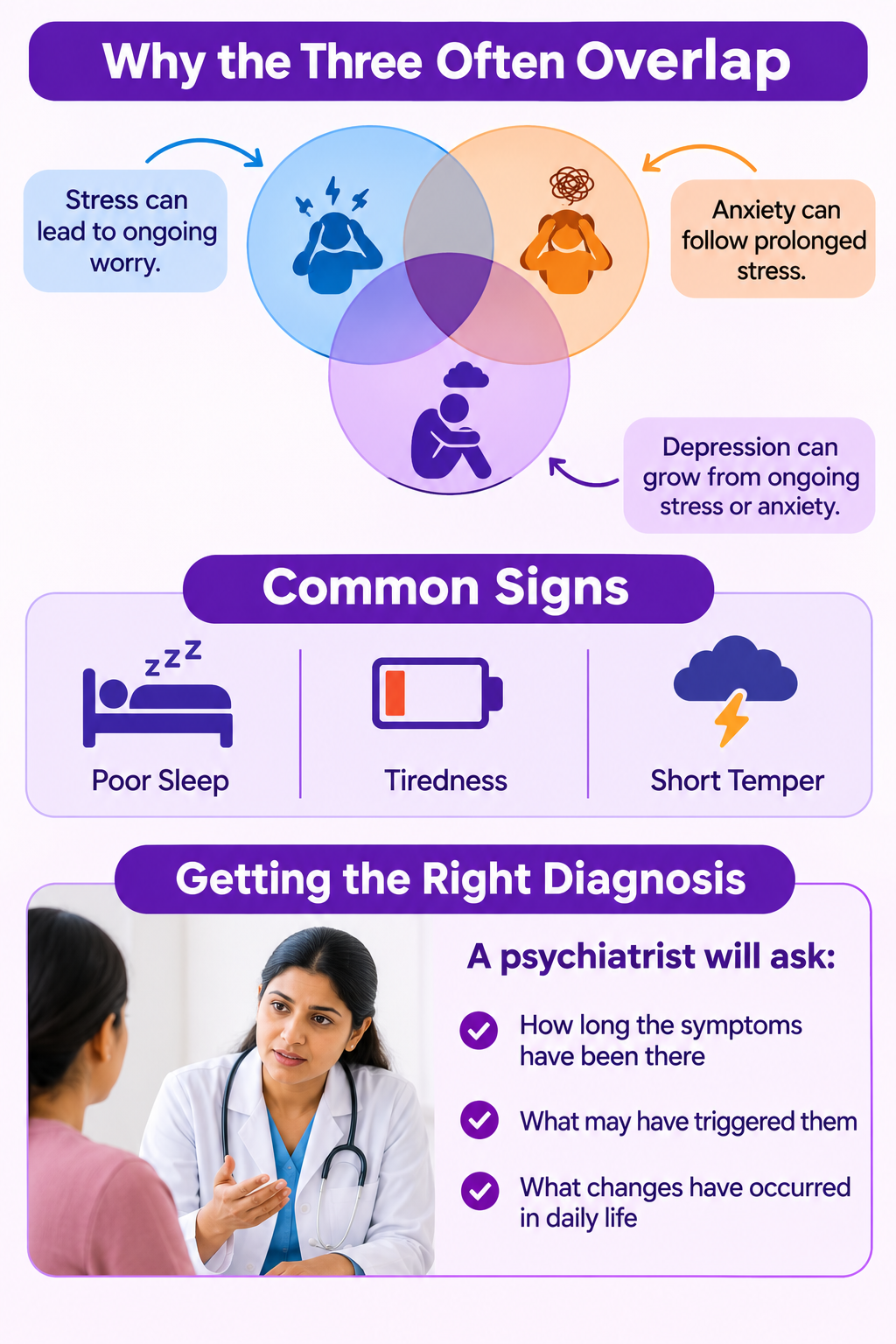
Why the Three Often Overlap?
Earlier than most families think, because the sooner treatment starts, the fewer relapses tend to follow.
- Two weeks: If the change has hung around that long and the person just isn’t themselves, stop waiting for it to pass and seek professional help .
- Voices: Hearing things nobody else does, or being sure someone’s watching, is a reason to book this week, not next month.
- Safety: Talk of self-harm, or anything that puts someone at risk, means a doctor the same day.
- Family history: And a parent or sibling with schizophrenia shifts the odds enough that even small, nagging changes deserve an early look.
Cannabis and other drugs can affect the picture. A good evaluation always asks about them.
Mood episodes can resemble early psychosis, and the guide on bipolar disorder treatment explains the warning signs.
What Determines Whether It Is Stress, Anxiety, or Depression?
No one symptom decides it. The psychiatrist builds the picture from several things. Was there a clear trigger? How long has it lasted, two weeks of low mood or six months of steady worry? Has it started to interfere with work, studies, or sleep? Family history counts, as do earlier episodes, thyroid problems, and heavy alcohol or drug use, since any of these can look like, or worsen, the same symptoms.
If these symptoms sound familiar, book a consultation
Key Takeaways
- Stress, anxiety, and depression are different, but they often come together.
- Stress follows a cause, while anxiety and depression can carry on without one.
- How long it lasts and how much it disrupts your day matter more than any single symptom.
- If it hasn’t eased in a couple of weeks, speak to a mental health professional.
- A mental illness is easier to treat when help comes early.
FAQ's
Can stress turn into anxiety or depression?
Yes, if it goes on for months with no break in between.
Does poor sleep mean anxiety or depression?
It can mean either, so what else is happening and for how long is what counts.
Is stress a mental illness?
No, though stress that never lets up can lead to one.
When should I see a psychiatrist?
Once it has crossed two weeks or started getting in the way of your day.
References
- National Institute of Mental Health: I’m So Stressed Out! Fact Sheet
Explains how stress, a response to an outside cause, differs from anxiety, an internal reaction that can continue without a threat. - World Health Organization: Depressive disorder (depression)
Gives an overview of depression, including its symptoms, causes and the treatment options available.
Disclaimer: This blog is for general informational purposes only and does not replace personalised medical advice.